
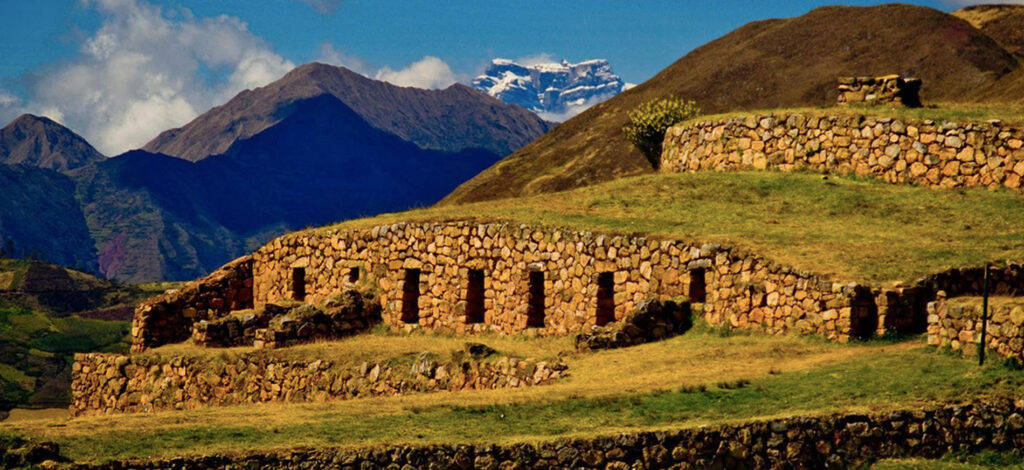
Andahuaylas is one of the seven provinces of Apurímac. The city and surrounding area offer a varied choice of places to visit.
Here are some of the main attractions:
Sóndor archaeological complex
The Sóndor archaeological complex has roots in the pre-Inca Chanka period. It lies about 24 kilometres northeast of Andahuaylas’s main square, approximately 44 minutes by car.
It served as an Andean ceremonial centre associated with worship of the earth and is recognised as National Cultural Heritage.

Andahuaylas main square
The Plaza de Armas is a central stop for its colonial buildings and nearby shops and restaurants. It offers an introduction to the city’s food and daily life.

Campanayocc Sanctuary
About 30 minutes from Andahuaylas, the sanctuary was completed in 1995.
Its hilltop location provides views across the city.
Dedicated to the Señor de Huanca, it was built through local collective effort. Every 14 September, a pilgrimage brings large numbers of worshippers to the main celebration.

Lake Pacucha
Around 17 kilometres from the city, Pacucha is included among Peru’s most beautiful lakes. Boat trips are a popular way to enjoy the scenery.
Visitors come for fishing, water sports, birdwatching, picnics and camping. The mountain setting offers a quieter break from city life.

San Pedro Church
This seventeenth-century colonial church combines mestizo Baroque design with carved stone details and religious statues. Inside are gilded retablos, decorated altars and a chapel dedicated to San Sebastián. It hosts local religious events and is recognised as National Cultural Heritage.

Chumbao colonial bridge
Built during the colonial period over the Chumbao River, the bridge connects parts of the city and routes towards Huancabamba Airport.

José María Arguedas memorial
The memorial honours the writer José María Arguedas and provides a setting for local cultural activities.

Curamba archaeological complex
Also called Inca Monte, Curamba is in Kishuara district. Archaeologist Raúl del Mar studied the site in 1989, interpreting it, alongside colonial accounts, as an Inca silver-processing centre. It is also thought to have served an administrative role following Inca control of the area.
Sutoq Machay
The Quechua name means “dripping cave” or “rain cave”. It lies near the meeting of the Chumbao and Orcconmayu rivers, in a canyon with a distinct microclimate. Crops include squash, cucumbers, tomatoes and maize; vegetation includes alder, tara, huarango, unka and chamana. The cave measures around 50 square metres and 13 metres high, with dripping stalactites and growing stalagmites. Mineral-rich water deposits material on surfaces it passes over. The wider area covers about 1.5 hectares of woodland and waterways, with a small cemetery among private and communal land.

Sóndor Raymi
Sóndor Raymi is a June celebration that recreates the origins of the Chanka people at Lake Pacucha and their conflict with the Incas near the Sóndor archaeological complex.
On 14 June, spectators gather for the representation of Usco Uillca, an ancestor of Chanka culture, emerging from Lake Pacucha at around 3,000 metres above sea level.

Pacucha Glamping
Pacucha Glamping offers accommodation facing one of Peru’s beautiful lakes, surrounded by countryside and places connected with the region’s long history.
Our glamping project in Peru gives visitors a base for enjoying the lake views and exploring nearby attractions.
Whether arriving from Lima, Cusco or abroad, guests can enjoy local food, outdoor activities and the surrounding landscape.

Andahuaylas Museum
The municipal archaeological museum displays regional finds, including ceramics and mummies associated with Chavín, Chanka, Wari and Inca cultures.

Hualalachi thermal baths
In Talavera district, about seven kilometres from Andahuaylas, a mountain spring feeds the Hualalachi pool.
Local tradition says that anyone who tastes the water will return, or perhaps settle in the community.

Pampachiri stone forest
The stone forest is in Pampachiri district, in the Andes of Apurímac.
Its pointed and mushroom-shaped formations rise around six to eight metres high. Known as the Peruvian Smurf houses, they are thought to have formed from materials deposited by the Sotaya and Qarwarasu volcanoes around four million years ago.

Pukllay in Andahuaylas
Pukllay is a traditional carnival celebration with pre-Hispanic roots. Activities include folk dancing, sports, costume parades and religious events during the carnival season.
The festival celebrates regional identity, honours ancestors and strengthens community ties. It helps keep traditions alive while providing an occasion for celebration.

Andahuaylas brings together colonial architecture, lakeside activities, archaeological sites, thermal baths and museums. Together they offer different perspectives on the region’s culture, nature and history.