
Apurímac lies in the southern Peruvian Andes and has seven provinces. Its varied landscapes offer a wide choice of places to explore.
Here are several attractions, including one of the region’s best-known lakes:
Saywite archaeological complex
The Saywite stone is a large granite block, approximately 11 metres in circumference, four metres across and 2.5 metres high.
More than 200 animal, geometric and architectural figures cover its surface. Smaller monuments nearby repeat some of these forms.

Ampay National Sanctuary

Sometimes called the botanical island of the Andes, Ampay is in Tamburco district, Abancay. It is known for its plant and animal life.
Wildlife includes deer, taruca, Andean condors, viscachas and Andean foxes.
Among its notable plants is the threatened intimpa tree.
Taraccasa viewpoint
Officially Taraccasa Ecological Park, this hilltop site is commonly known as the Taraccasa viewpoint.
It overlooks Abancay and has recreational areas, an artificial pond and a small zoo.

Pampachiri stone forest
The stone forest lies in Pampachiri district, in the Andes of Apurímac.
Its pointed and mushroom-shaped formations, also known as the Peruvian Smurf houses, stand around six to eight metres high. They are thought to have formed from volcanic material deposited by Sotaya and Qarwarasu around four million years ago.

Ampay mountain
Ampay reaches 5,235 metres above sea level. Its snowy peaks attract visitors interested in mountaineering and outdoor activities.
Ice from the mountain feeds several lakes in Abancay province.

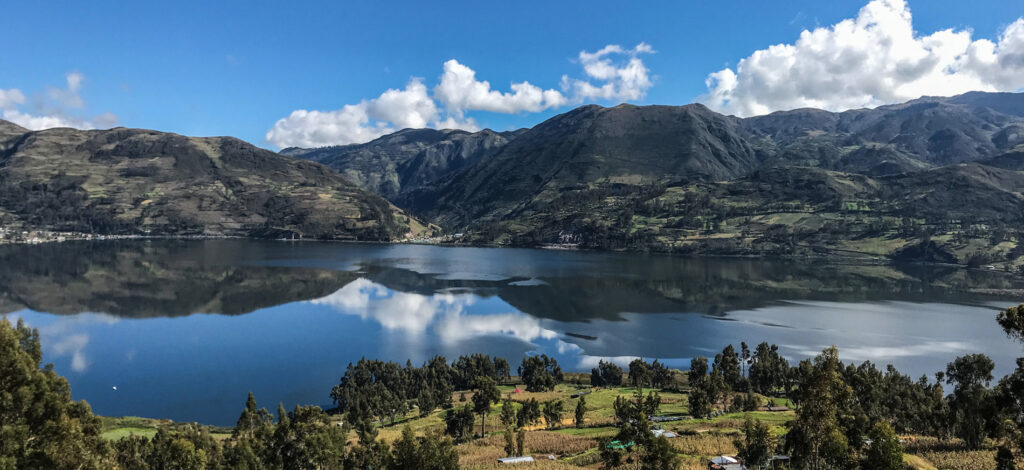
Lake Pacucha
The lake is in the district of the same name. Visitors come for its views and activities including paddleboarding, fishing and boat trips.
Lake Pacucha also offers opportunities to observe plants and wildlife and spend time outdoors.

Sóndor archaeological complex
The Sóndor archaeological complex has roots in the pre-Inca Chanka period. It is around 24 kilometres northeast of Andahuaylas’s main square, about 44 minutes by car.
It was an Andean ceremonial centre associated with worship of the earth and is recognised as National Cultural Heritage.

Curamba archaeological complex
Also called Inca Monte, Curamba lies in Kishuara district, Andahuaylas province. Archaeologist Raúl del Mar studied it in 1989 and interpreted it as an Inca silver-processing centre, with an additional administrative role after the Chanka were displaced. It remains one of the less visited archaeological attractions in Apurímac.
Pacucha Glamping
Pacucha Glamping offers a stay beside one of Peru’s beautiful lakes, surrounded by countryside and the region’s cultural heritage.
Our glamping project in Peru introduces visitors to the lake and nearby attractions from a comfortable base overlooking the water.
Guests arriving from Lima, Cusco or abroad can enjoy local food, outdoor activities and the scenery.

Why visit Apurímac?
Apurímac brings together mountain landscapes, archaeological sites and everyday regional life. Saywite offers a look at the past, while Abancay’s main square provides a setting for exploring the city. A wider journey through the southern Andes can also include waterfalls and traditional bridges, with each stop offering a different perspective on the region.